Candidate
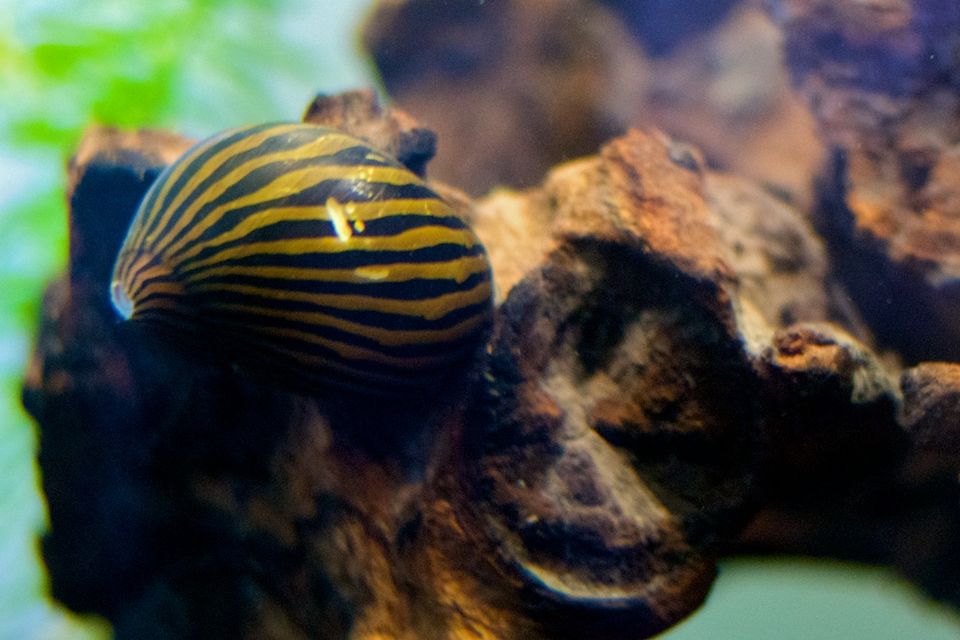
Nerite snail
Vittina natalensis
Open full care profile →Photo identification · reviewed 2026-07-31
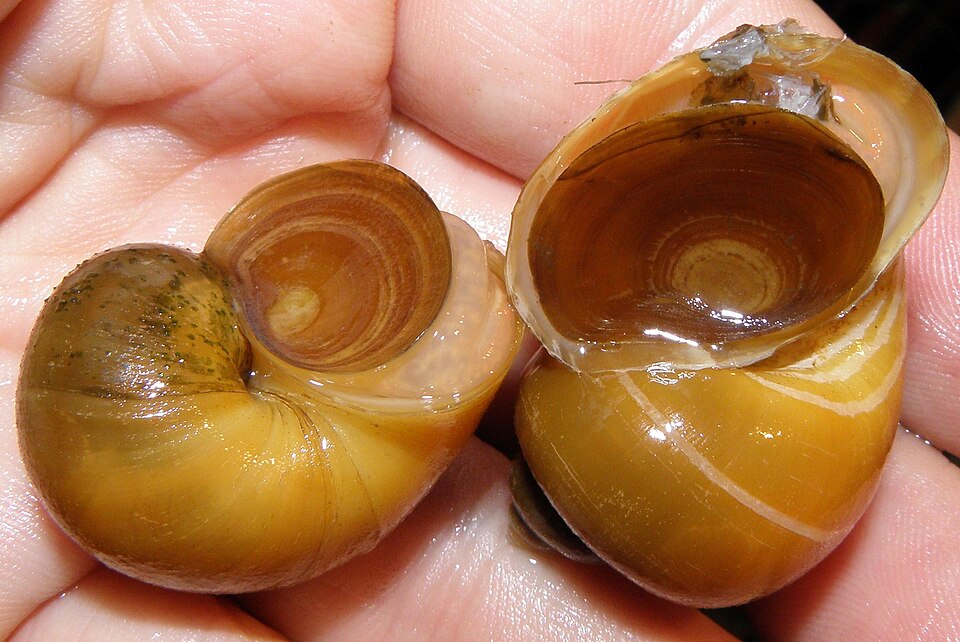
Shell opening, antennae and adult shell shape separate two popular aquarium snails with very different reproduction.
Candidate
Vittina natalensis
Open full care profile →Candidate
Pomacea diffusa
Open full care profile →Interactive observation guide
Use the photographs above, then select each clue. Do not make an identification from one feature alone.
Mystery snails have a rounder, globose shell and a visible trapdoor, with long fine tentacles.
Care reality check
A visual identification changes which limits you should plan around.
| Requirement | Nerite snail | Mystery snail |
|---|---|---|
| Adult size | 2–3 cm | 4–6 cm |
| Minimum tank | 20 L · 30 cm | 25 L · 30 cm |
| Temperature | 20–28°C | 20–28°C |
| pH | 7–8.5 | 7–8.4 |
| GH | 8–25 dGH | 8–25 dGH |
| Social minimum | 1 | 1 |
| Temperament | peaceful | peaceful |
Visible differences
Shared traits
Why it matters
Nerites do not complete their life cycle in ordinary freshwater; mystery snails can reproduce and create a larger bioload.
Uncertainty
Shell pattern is extremely variable. Use shell geometry and anatomy instead of colour alone.