Candidate
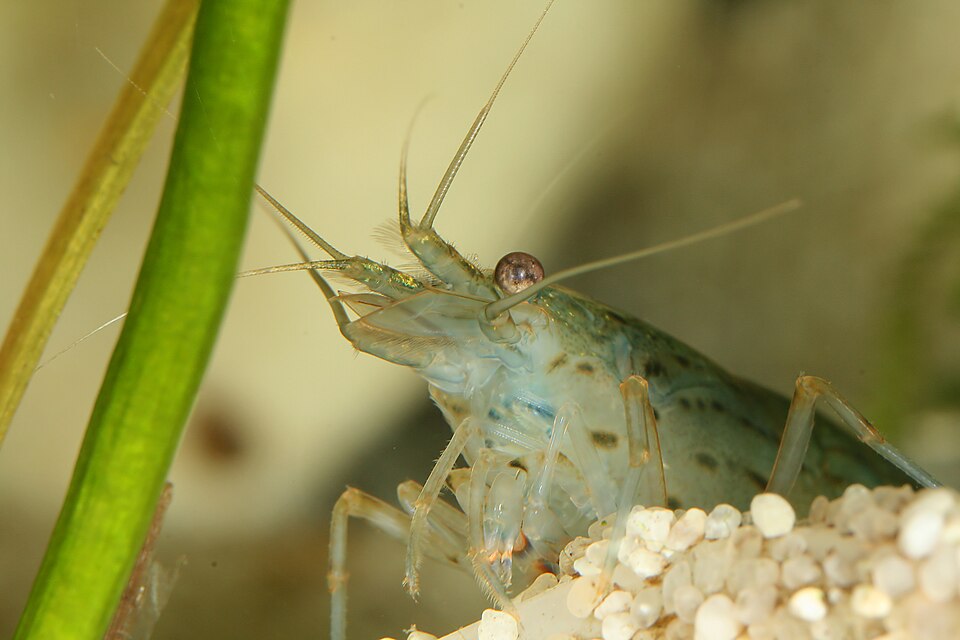
Amano shrimp
Caridina multidentata
Open full care profile →Photo identification · reviewed 2026-07-31
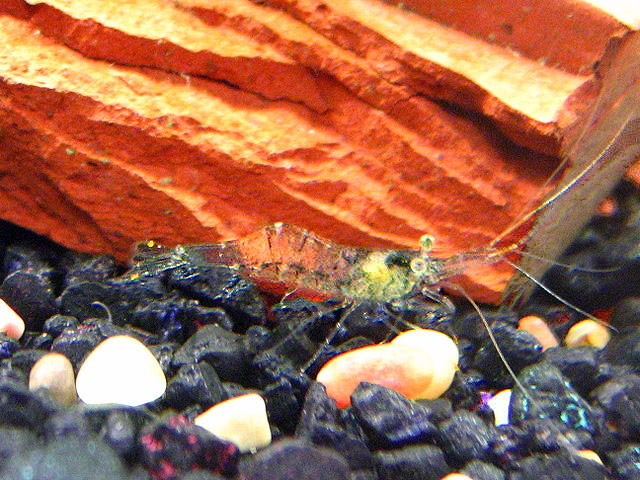
Amano side markings and ghost shrimp transparency provide clues, but the shrimp trade contains several near-identical species.
Candidate
Caridina multidentata
Open full care profile →Candidate
Palaemonetes paludosus
Open full care profile →Interactive observation guide
Use the photographs above, then select each clue. Do not make an identification from one feature alone.
Amano shrimp usually have rows of brown or reddish dashes and dots along a translucent grey body.
Care reality check
A visual identification changes which limits you should plan around.
| Requirement | Amano shrimp | Ghost shrimp |
|---|---|---|
| Adult size | 4–6 cm | 3–5 cm |
| Minimum tank | 30 L · 45 cm | 25 L · 35 cm |
| Temperature | 20–27°C | 18–27°C |
| pH | 6–7.8 | 6.5–8 |
| GH | 4–15 dGH | 5–20 dGH |
| Social minimum | 4 | 6 |
| Temperament | peaceful | peaceful |
Visible differences
Shared traits
Why it matters
They differ in adult size, feeding role and breeding biology; neither should be bought as disposable clean-up livestock.
Uncertainty
'Ghost shrimp' can mean multiple Palaemonetes or Macrobrachium species. Long predatory arms are a warning that exact ID needs specialist review.